Solarpunk Architectures: Designing Infrastructures for Tech-Nature Coexistence

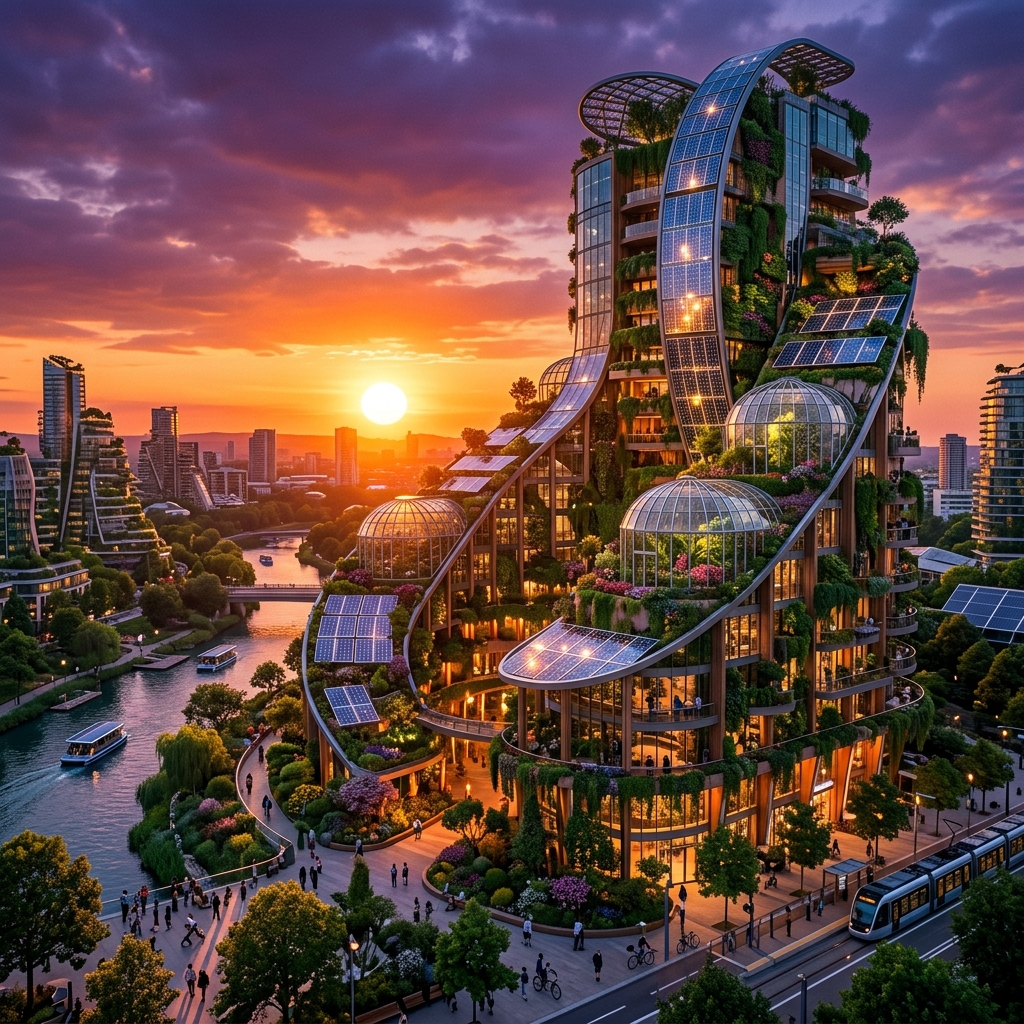
Table of Contents
Standard visions of our tech future are boring. Classic cyberpunk offers neon-drenched corporate dystopias. Technology is advanced, but human lives are ruined. On the other side is corporate greenwashing. Solar panels are pasted on giant concrete data centers. They continue to extract Earth’s resources under a green badge.
We choose a third path. Solarpunk.
It is not about pretty illustrations of cities with vines. It is a strict engineering philosophy. How do we design tools that work with nature instead of conquering it? JULZ was founded in Kenya to explore this. Since 2023, The Forge has been our sandbox for physical and digital coexistence.
To build systems that align with ecology, we must read nature’s source code. Biological networks solved resource allocation and routing billions of years ago.
Learning from the Forest Floor: Biomimicry in Code
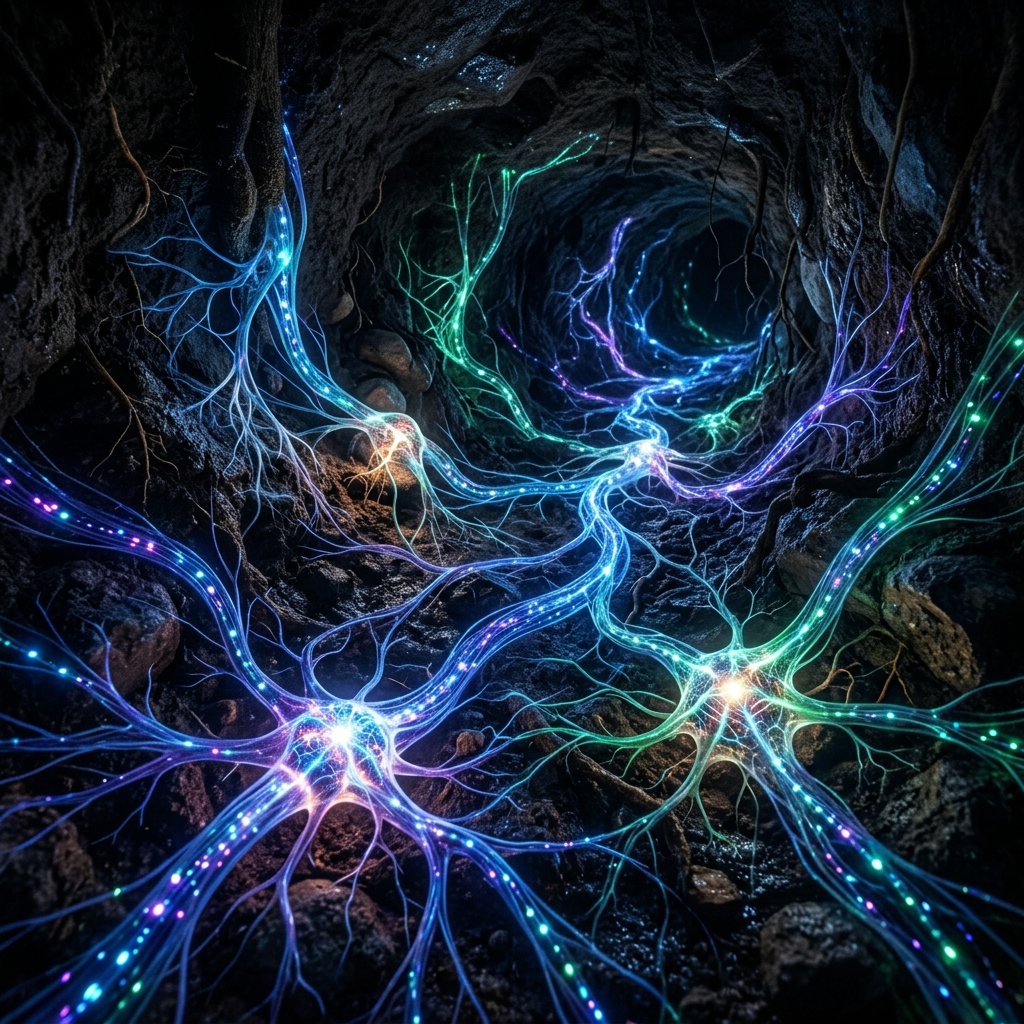
Consider a forest. Trees are not isolated. They connect underground through mycelial fungal webs. This organic network shares nutrients and warns about pests. It routes resources where they are needed most.
If we apply this biomimetic model to software engineering, we move away from massive, energy-hungry centralized data centers. Instead, we build:
First, distributed topologies. Like mycelial networks, our software systems are distributed. If one hub goes offline, the surrounding nodes automatically reroute traffic and resources locally. This prevents the catastrophic single-point failure common in modern cloud setups.
Second, metabolic code. Instead of running servers at peak capacity 24/7, metabolic code mimics biological regulation. It dials down CPU cycles and resource consumption during quiet hours, conserving power and extending hardware lifespans. In a solarpunk architecture, server workloads can dynamically adapt to local solar energy availability.
Third, local-first platforms. A biological cell behaves based on its immediate chemical environment. Similarly, our software is local-first. It runs on local machines, processes data locally, and syncs to networks only when necessary. This drastically reduces the energy overhead of continuous network communication.
Solarpunk in Physical Form: Aju Studio and Ajulu Labs
This philosophy extends directly from virtual pixels to physical bricks. Through Aju Studio (our design and UI/UX sandbox) and Ajulu Labs (our R&D workshop), we study natural architectures like termite mounds. Termites maintain steady temperatures in extreme heat using passive ventilation networks. By applying these ventilation patterns, we can build silent server enclosures and office structures that cool themselves naturally. This eliminates the massive power drain of active air conditioning.
We also test 3D printing with local organic materials. Replicating the cellular, fractal patterns of bones allows us to use less raw material while maintaining extreme structural strength. These biomorphic designs are lighter, more durable, and naturally distribute mechanical stress.
Funding the Long Horizon
Building sustainable tech requires that we reject the venture capital playbook of Silicon Valley. We align with product-focused teams like 37Signals, Huly, and UNMS. These builders focus on creating real products that solve real problems, refusing to play the game of raising consecutive rounds of hyper-inflated capital.
When a company is beholden to short-term investors, it is forced to prioritize rapid scale over sustainability. Speculative pressures force companies to exploit user attention or use cheap, disposable components. At JULZ, we route our investments through The Hold. This shelters our R&D from short-term financial pressures. We build for the long horizon, designing tools that will serve communities for decades, not just until the next funding round.
The solarpunk future is not a dream. It is being built now. Let us build things that endure.