The Great Cloud Exit: Reclaiming Independence in the Age of Rented Infrastructure

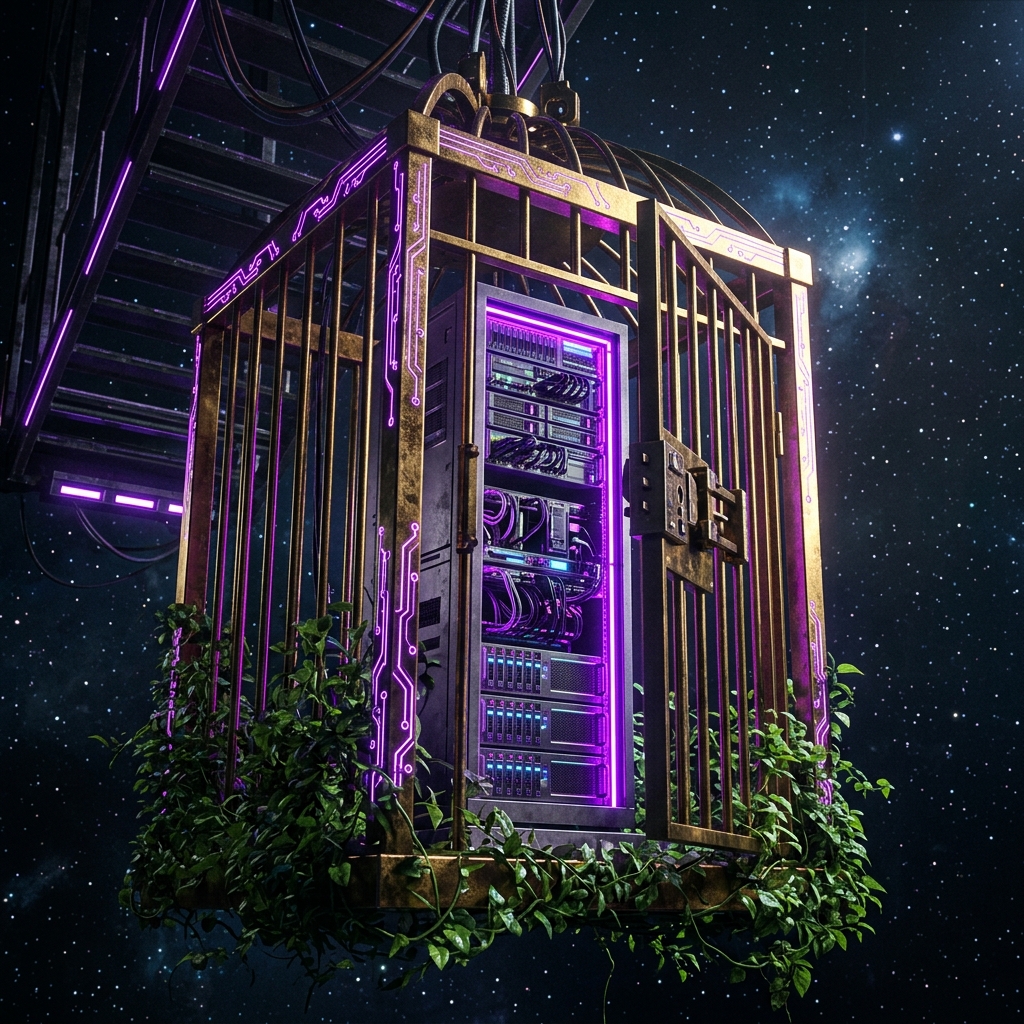
Table of Contents
For the last fifteen years, the technology industry operated under a singular, unquestioned dogma: the cloud is the future, and owning hardware is a relic of the past. Startups and enterprises alike rushed to migrate their databases, computing power, and tools into the servers of a small handful of centralized giants. We were promised infinite scalability, zero maintenance, and cost efficiency.
But promises, when left unchecked, have a habit of turning into enclosures.
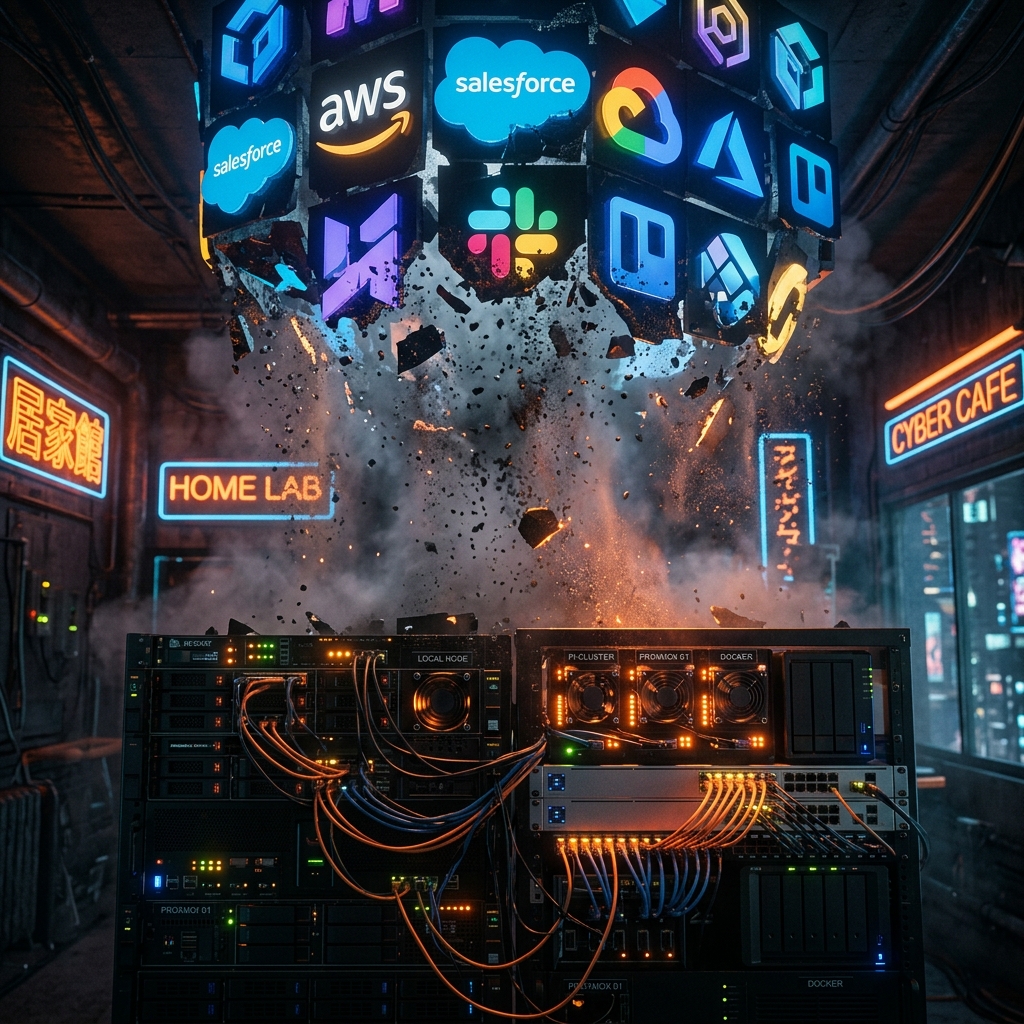
Today, the winds are shifting. A quiet but powerful counter-revolution is underway. Developers, privacy advocates, and increasingly, major enterprises are participating in what is now known as the Great Cloud Exit. They are packing up their containers, deleting their proprietary cloud accounts, and moving their workloads back to hardware they actually own. What started as a hobbyist homelab subculture has matured into a strategic civilizational movement.
The Financial Trap of Rented Iron
The most visible catalyst for this shift is financial. When you build on the public cloud, you are not buying computing power; you are leasing it at a premium.
No one has articulated this trap more clearly than David Heinemeier Hansson (DHH), the creator of Ruby on Rails and co-founder of 37Signals. In late 2022, DHH shocked the tech world by announcing that 37Signals (the company behind Basecamp and HEY) was migrating entirely off Amazon Web Services (AWS) and Google Cloud. Their reasoning was simple: the cloud bill had become absurd.
For a company of their size, renting computers in the cloud was costing over $3.2 million a year. By purchasing their own Dell servers and co-locating them in standard data center racks, DHH estimated they would save $1.5 million annually. In 2023, they executed the migration. The results were exactly as predicted: the hardware paid for itself in less than six months, performance improved, and their infrastructure expenses plummeted.
As DHH noted in his essay We Have Bought Our Servers, the cloud makes sense only under two conditions: when your traffic is highly volatile and unpredictable, or when your company is so early that you cannot afford the upfront cash for a single server. For everyone else, renting computers is like renting a house indefinitely. It is a wealth transfer from your balance sheet to a landlord’s.
The Rise of the Mini PC and the Silent Homelab
While enterprises follow 37Signals’ lead into co-located racks, individuals and small business owners are executing the cloud exit at a different scale: the homelab.
Historically, setting up a homelab meant acquiring loud, power-hungry, enterprise rack-mount servers that sounded like jet engines and doubled your home electricity bill. Today, the revolution is silent, small, and highly efficient, driven by the rise of Mini PCs.
Companies like Minisforum, Beelink, and Intel (with their NUC line) are producing small-form-factor computers equipped with modern AMD Ryzen and Intel Core processors. These devices draw less power than a standard incandescent light bulb, sit silently on a desk, yet boast 8 to 16 cores, up to 96GB of DDR5 RAM, and multiple terabytes of NVMe storage. For the price of three months of a modest AWS development database, a developer can own a Mini PC that runs circles around virtualized cloud instances.
With this hardware sitting on a desk or in a closet, the developer is no longer a tenant. They own their own computing iron.
Sovereign Operating Systems: Democratizing the Stack
Owning the hardware is only half the battle; the software stack must be equally accessible. Setting up databases, reverse proxies, and docker networks manually is a barrier for non-system administrators.
To bridge this gap, a new generation of sovereign operating systems has emerged, designed to convert raw hardware into friendly, private local clouds:
- CasaOS: A simple, elegant interface built on top of standard Debian. It provides a visual dashboard where users can install self-hosted applications (like Nextcloud, Plex, or local databases) in a single click using Docker.
- ZimaOS: Developed by the creators of the ZimaBoard, ZimaOS is a customized operating system tailored for local storage (NAS) and local AI execution. It makes managing files and setting up offline AI models simple and plug-and-play.
- UmbrelOS: What started as a platform for hosting Bitcoin nodes has evolved into a gorgeous, consumer-grade operating system. UmbrelOS features a clean app store that allows anyone to host their own password managers, search engines, and document editors with zero configuration.
- OlaresOS: A neomodern operating system designed to act as a sovereign context manager, allowing users to host their personal AI models and secure their cognitive space locally.
These operating systems represent a shift in human-computer interface design. They take the ease of SaaS and apply it to self-hosted software, stripping away the complexity while preserving the privacy and ownership of the underlying data.
The Path Forward: Owning Our Context
At JULZ, founded in Kenya in 2016 and established in 2023, this movement is the very core of The Forge. We do not believe that the future of humanity lies in thin clients connecting to massive, centralized, overseas mainframe grids. That is a return to the computing topologies of the 1970s, wrapped in neon lights.
We believe in Sovereignty. We believe that every family, every business, and every community must have the capability to host their own records, run their own private AI agents, and manage their own local power and water systems.
Through Ajulu Labs, we are prototyping custom, quiet homelab server configurations; designing silent, biophilic enclosures that cool themselves passively and fit beautifully into living spaces. We are coding local-first platforms that keep context secure, preventing the cognitive harvesting of corporate attention feeds.
The cloud was a convenient detour, but the exit is clear. The hardware is cheap, the software is open, and the autonomy is yours to reclaim. The forge is open, and it is time to bring your data home.