Web 2, Web 3, and Web 5: The Architecture of Trust and Sovereignty
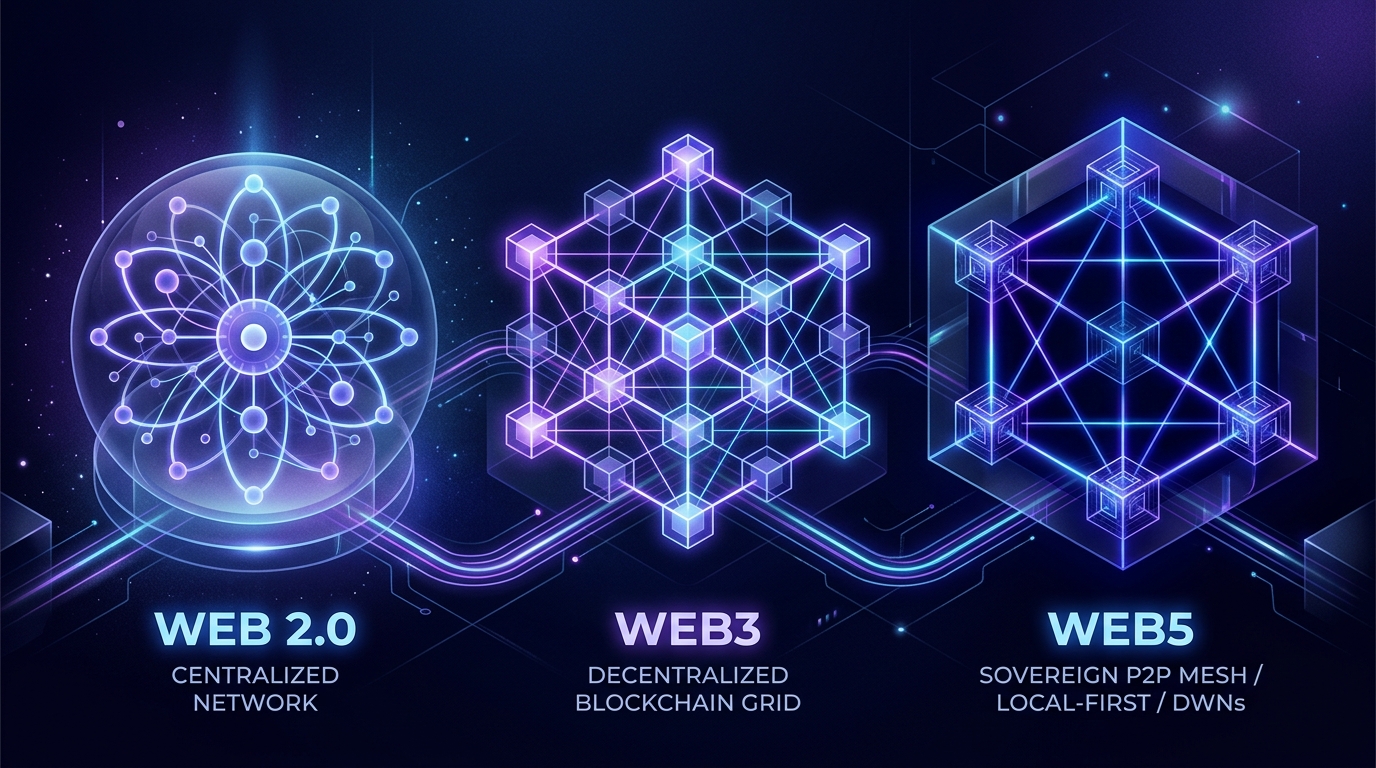
Table of Contents
The history of the World Wide Web is a history of the struggle for custody over information, identity, and trust. Every decade, the underlying architecture shifts, redrawing the boundaries between individual autonomy and institutional control. Today, the conversation is no longer just about content; it is about sovereignty.
To understand where we are going, we must dissect the three paradigms currently contesting the future of human coordination: Web 2.0, Web3, and Web5. By examining the arguments of their creators and critics, we can map the architectural journey toward technical self-reliance.
Web 2.0: The Read-Write Enclosure
In 2004, Tim O’Reilly popularized the term “Web 2.0” to describe a shift from static, read-only websites to dynamic, user-generated applications. It was the birth of the social, collaborative web. Tim Berners-Lee’s original vision of a hyperlinked global library evolved into a living network of shared databases, comments, and media.
However, Web 2.0 carried a structural flaw: it was built on centralized client-server protocols. To interact, users had to surrender custody of their identity and data to a handful of platform operators.
Tim Berners-Lee himself became one of Web 2.0’s most vocal critics. Observing the consolidation of the web into corporate silos, Berners-Lee remarked:
“The web has ended up producing a master-slave relationship, where the master is the big platform and the slave is the user who is giving away their data.”
To counter this enclosure, Berners-Lee initiated the Solid project, advocating for “pods” (Personal Online Data stores) that restore data ownership to the individual. Under Web 2.0, users have the power to Read and Write, but the infrastructure itself remains strictly rented.
Web3: The Read-Write-Own Ledger
In 2014, Gavin Wood, co-founder of Ethereum and creator of Polkadot, coined the term “Web3” (stylized as a single word to distinguish it from semantic web initiatives). Wood envisioned a web where users do not rely on central organizations to manage trust. Instead, trust is mathematically encoded into a public, decentralized ledger—a blockchain.
As Wood wrote in his seminal essay Dapp Developer:
“Web3 is a set of inclusive protocols that provide building blocks for application makers… to construct websites where users own their data and where identity is not rented.”
This paradigm is best summarized by general partner Chris Dixon in his book Read Write Own. Dixon describes Web3 as the transition to “owner-operated networks.” In this model, blockchain networks use tokens to align incentives between developers, node operators, and users, allowing communities to govern and own the digital protocols they depend on.
In Web3, the ledger is the source of truth. By combining Decentralized Identifiers (DIDs) with smart contracts, Web3 introduces a new layer: Own. However, critics argue that Web3’s reliance on global public blockchains introduces significant transaction costs, slow execution speeds, and heavy dependence on venture capital-funded protocol tokens.
Web5: The Tokenless, Decentralized Web Platform
In June 2022, Jack Dorsey (founder of Block, formerly Twitter) and Mike Brock (lead developer at TBD) introduced Web5. Rather than building another blockchain with speculative utility tokens, Web5 proposes a tokenless Decentralized Web Platform (DWP) built directly on Bitcoin’s sovereign design.
Dorsey’s critique of Web3 is rooted in centralization vectors:
“You don’t own ‘web3.’ The VCs and their LPs do. It will never escape their incentives. It’s ultimately a centralized entity with a different label.”
Web5 solves the problem of digital sovereignty by bypassing blockchains entirely for application logic. Instead, it combines three core open-source protocols:
- Decentralized Identifiers (DIDs): Cryptographic identity markers that users own and control without a central registrar.
- Verifiable Credentials (VCs): Standardized, signed cryptographic proofs used to verify identity claims (e.g., age, reputation, or ownership) off-chain.
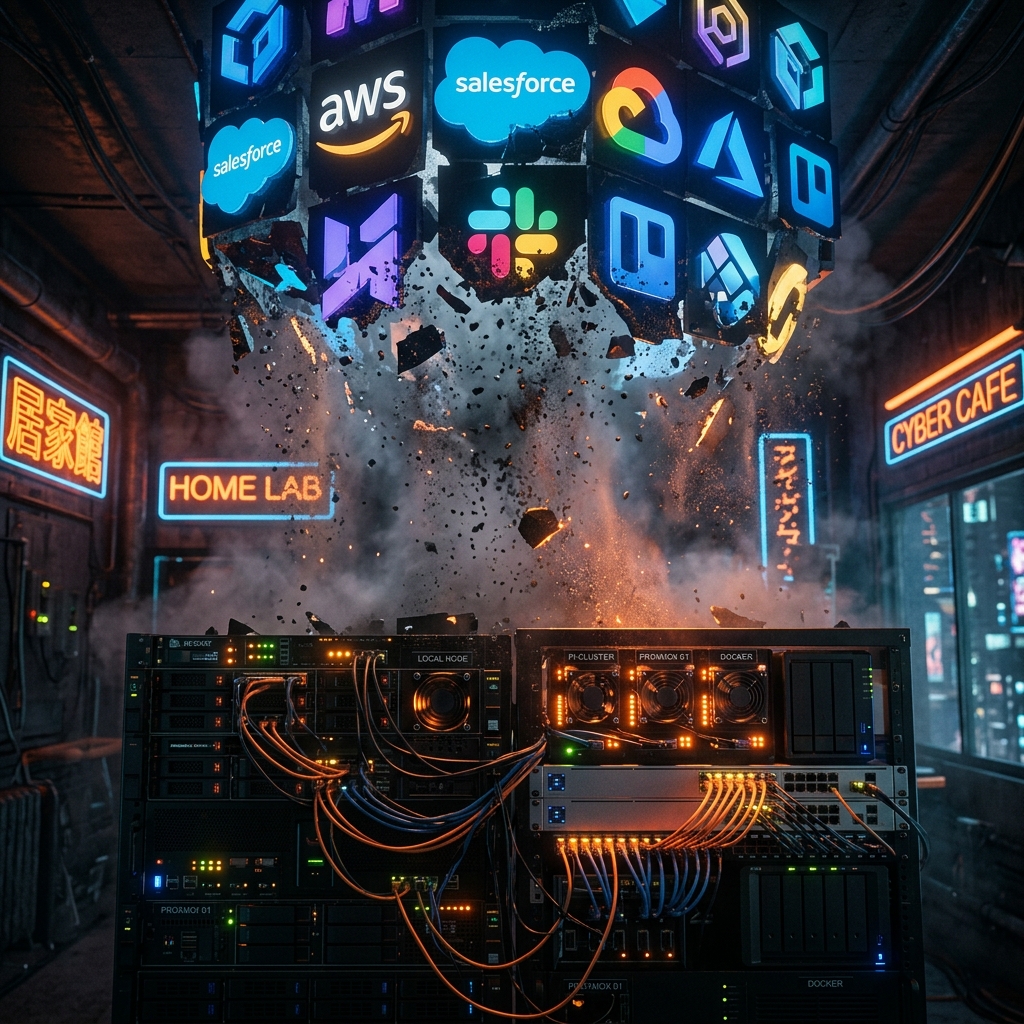
- Decentralized Web Nodes (DWNs): Personal, encrypted data storage units that can run on a user’s local hardware (like a mini PC or homelab) or a personal cloud, syncing data peer-to-peer.
As Mike Brock explained, Web5 is designed to bring a “local-first” philosophy to the internet. If you use a Web5 application, your data lives on your own DWN. Applications are merely thin layers of code running on top of your personal storage node. If you switch applications, you do not lose your files, because the app never held them in the first place.
The Evolution of the Web
| Paradigm | Architectural Trust Model | Primary Action | Identity Custody | Storage Model |
|---|---|---|---|---|
| Web 2.0 | Centralized Platform Servers | Read & Write | Corporate Registrars (Google, Meta) | Proprietary Silos (AWS, GCP) |
| Web3 | Decentralized Public Blockchains | Read, Write & Own | Cryptographic Wallets & Ledgers | Distributed Ledgers & IPFS |
| Web5 | Local-First Sovereign Nodes | Read, Write & Control | Decentralized Identifiers (DIDs) | Personal Decentralized Web Nodes (DWNs) |
Balancing Tech and Nature: The Sovereign Path Forward
The transition from Web 2.0 to Web3 and Web5 is more than an engineering choice; it is a philosophical redirection. We are moving away from a model of digital extraction toward a model of technical stewardship.
At the core of this transition is the balance between physical existence and digital capability. True technological self-reliance does not isolate us inside virtual worlds; it provides the infrastructure to secure our offline lives, protect our mental focus, and restore balance with the natural world. Whether through tokenless sovereign protocols or local-first nodes, the goal remains the same: reclaiming custody of our tools to build a resilient, abundant future.